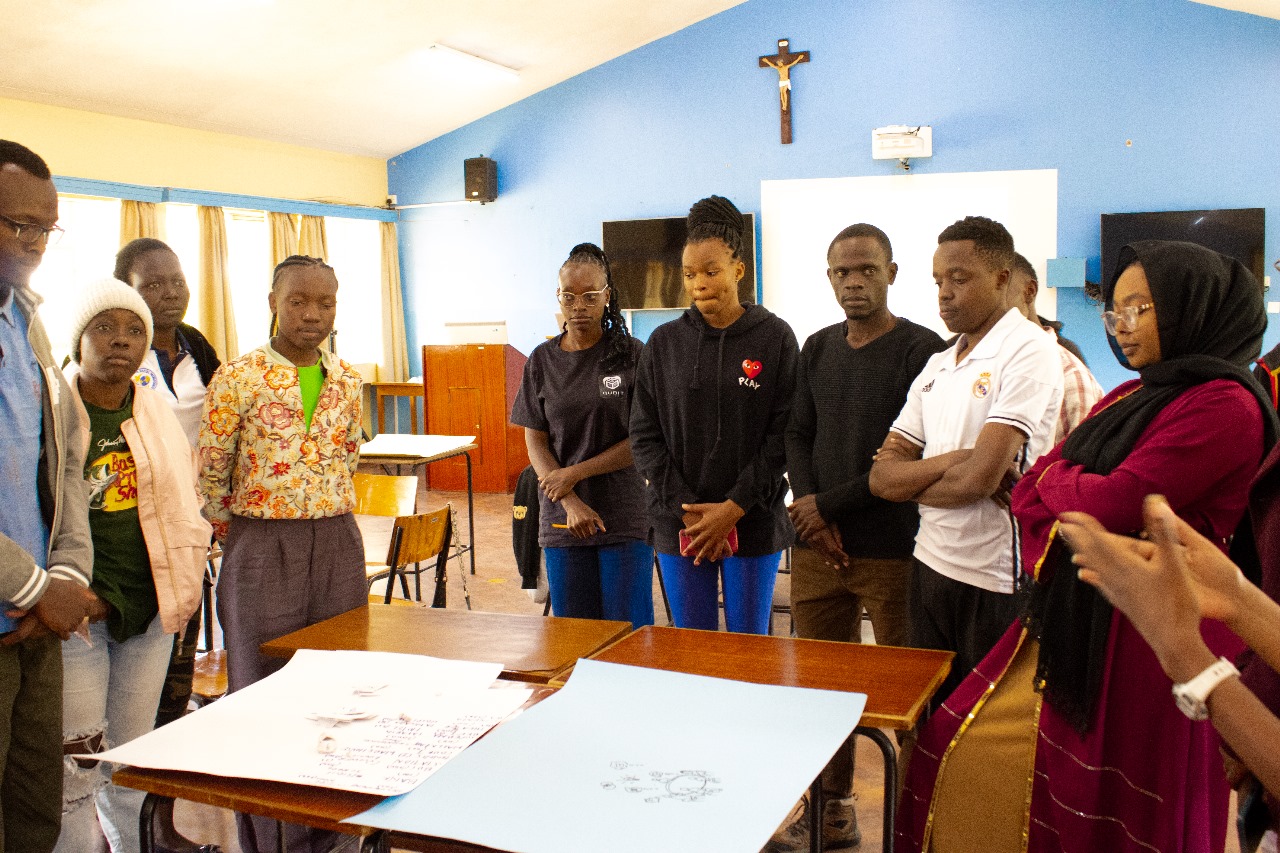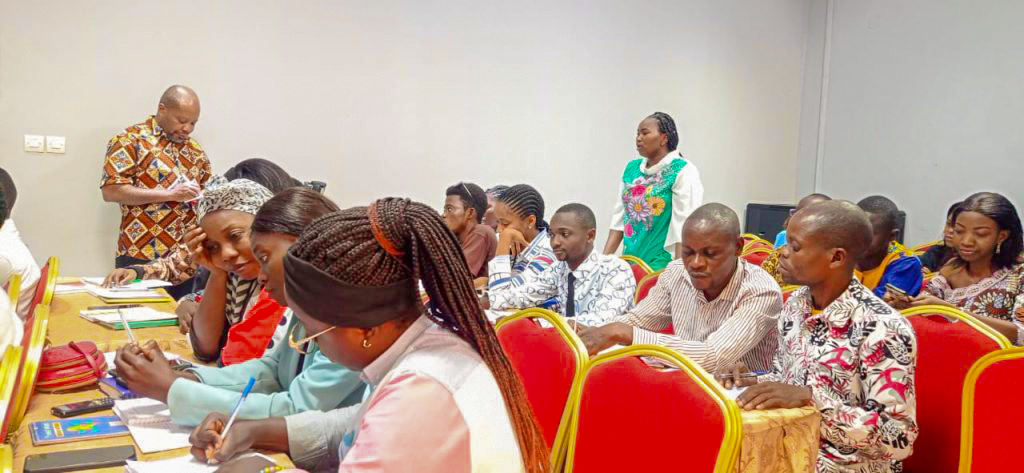
Across Huruma and its constituent areas, including Kariobangi, Korogocho, Mathare North, Dandora, Baba Dogo and Eastleigh, a quiet economic revolution is taking shape in the hands of grassroots entrepreneurs. Their journey began with a leadership and business innovation training facilitated by the Comboni Alliance for Social Entrepreneurship (CASE), where community members gained the skills, structure and confidence to strengthen their businesses and organise themselves into active savings and loan groups.
What started as a practical training has grown into six active business hubs, transforming knowledge into action and showing how consistent follow-up and pastoral accompaniment can spark real, sustainable change at the grassroots.
From Training to Transformation
CASE’s capacity-building workshops equipped participants with foundational skills in entrepreneurship, financial literacy, savings, leadership, and customer service. But the real transformation happened afterwards, as participants organised themselves into four initial business hubs: Huru-Kiama, Tukilanie Mbaitu, Airbase, and Korogocho, with two more (Star-Urji and Green Jungle) forming later.
These hubs now meet weekly or biweekly to save collectively, repay loans, strengthen group governance, and support one another’s businesses. Their adoption of the Voluntary Savings and Loaning (VSL) model has been especially impactful, allowing members to borrow responsibly, reinvest in their enterprises, and create financial safety nets for their families.
Across several hubs, members can now pay school fees, expand stock, access healthcare, and stabilise their livelihoods. These tangible outcomes show the power of capacity building when paired with ongoing mentorship.
Leadership Growing From Within
One of the strongest outcomes of CASE’s work is the emergence of strong, community-grounded leadership.
Huru-Kiama stands out as a model. The hub maintains a consistently high quorum, keeps detailed financial records, and has a disciplined loan repayment culture with all members having cleared their loans by mid-2025. Contributions are strong, enabling members to access loans as high as 30,000 KES and collect between 15,000 and 40,000 KES weekly.
Tukilanie Mbaitu, now transformed into the Eastleigh North CBO, shows how local governance can evolve. Leaders expanded membership, strengthened rules, and introduced measures such as penalties for repeated absenteeism to ensure accountability.
Star-Urji, a youth-driven hub, has energised young people with training in planning, digital marketing, and entrepreneurship. Their early momentum boosted youth participation significantly, reflecting the potential of youth leadership when given the right tools.
Across these hubs, leadership is no longer just a training topic; it is something members practise, shape, and strengthen together.
Grassroots Innovation Taking Shape
With better financial discipline and improved business skills, members have begun experimenting with new ideas, products, and strategies. Some hubs pursued digital training to market their products online, while others focused on upgrading branding, customer service, or sustainable business practices.
Huru-Kiama and Eastleigh North’s strong savings culture in has enabled members to reinvest in stock, tools, and business upgrades.
The newer hubs are incorporating digital skills, sustainable business practices, and green innovation; Green Jungle, for instance, has leaned into environmental innovation by exploring waste management and green product development, while Star-Urji has embraced digital marketing skills to boost visibility. This positions them well for future growth as they continue to stabilise.
Innovation here isn’t flashy or high-tech; it is rooted in the daily realities of running small businesses in fast-changing, resource-limited environments. It is practical, adaptive, and community-driven.
Challenges That Still Need Attention
The journey hasn’t been smooth for every group, and the challenges they face are helping shape the kind of support they need moving forward.
Korogocho struggled with low attendance and leadership conflicts, eventually halting activities altogether.
Airbase experienced a severe decline in participation, leading to financial losses and stagnation.
Green Jungle lost several members after falling victim to a fraudulent SACCO, reducing contributions and overall capacity.
Across hubs, common challenges persist: digital literacy gaps, inconsistent attendance, delayed repayments, and the economic pressures facing many households. These challenges do not overshadow the overall progress. They emphasise the need for continued leadership formation, conflict resolution support, and frequent follow-ups to help struggling hubs rebuild.
Accompaniment: The Heart of CASE’s Approach
What has kept most hubs on track is consistent follow-up. These visits help rebuild morale, strengthen accountability, resolve conflicts, and ensure groups put their training into practice. They represent the pastoral dimension of CASE’s work: walking alongside communities, not just training them and stepping back.
This approach has allowed members to stay motivated, united, and focused on building sustainable livelihoods.
Looking Forward
The six business hubs formed through CASE’s capacity-building efforts show what is possible when practical training meets committed leadership and community solidarity. Strong hubs like Huru-Kiama and Eastleigh North offer a blueprint for success. Newer hubs show promise, while struggling ones highlight areas where renewed support is needed.
As CASE continues to walk with these communities, the focus remains clear: strengthen leadership, deepen business innovation, and nurture resilient, faith-rooted livelihoods that are well-positioned to drive long-term social and economic transformation in their communities.